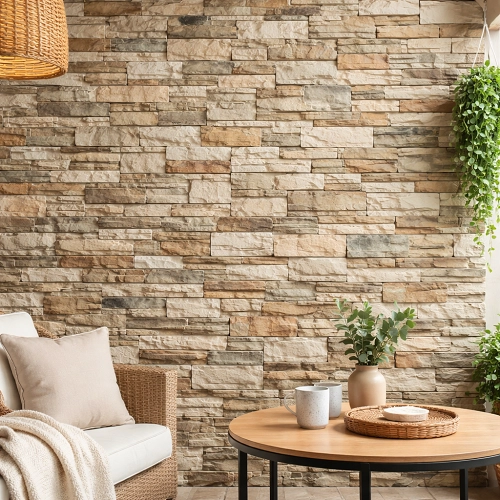
PU stone panels (also called PU stone wall panels, polyurethane stone panels, or faux PU stone cladding) are engineered decorative panels made from high-density polyurethane formulated and finished to replicate the look, texture and sometimes the weight feel of natural stone or brick. They are designed as a lightweight, low-cost, fast-install alternative to quarried stone for interior and exterior cladding, façades, feature walls, fireplaces, landscaping and retail/commercial fit-outs.
Material composition and structure
- Core polymer: The bulk of a PU stone panel is a cast or molded polyurethane (PU) formulation. Manufacturers typically use a high-density polyurethane foam or solid polyurethane resin engineered for mechanical strength, weather resistance and dimensional stability. Additives and reactive systems (isocyanates + polyols, catalysts, blowing agents, fillers) are tuned to control density, cell structure and cure behavior.
- Surface skin/finish: The visible surface is produced directly in textured molds or by applying multi-layer coatings (pigments, topcoats, UV stabilizers, and protective lacquers) to reproduce stone grain, mortar joints or other surface effects. Some manufacturers add mineral fillers or thin protective layers to improve abrasion resistance and thermal stability.
- Backing and reinforcement (optional): Panels may be plain cast PU, or reinforced with textile/non-woven backings (e.g., fiberglass, polyester scrim) or a thin composite backer to improve panel flatness, screw retention and impact resistance. Reinforcements also help where panels are large or used in high-stress exterior cladding.
Manufacturing processes
There are two common production approaches:
- Molded casting: Two-part PU formulations are poured into precision metal molds that contain negative texture of the desired stone. After demolding and post-curing, panels are trimmed, painted/airbrushed and coated to add color depth and durability. This method is ideal for highly detailed textures (stacked stone, rubble, limestone).
- Spray/foam and finishing: High-density PU can be sprayed and then manually textured and coated. This is more common for onsite or bespoke shapes but less repeatable for high-volume identical panels.
Quality control focuses on dimensional tolerances, surface consistency, adhesion of topcoats and edge/fastener reinforcement.
Typical physical and performance properties
Properties vary by formulation and product class, but common characteristics include:
- Lightweight: Significantly lower mass than quarried stone — easy handling and reduced structural load. This is one of the primary selling points.
- Thickness range: Manufacturers offer panels commonly from ~16 mm up to 100 mm or more depending on profile and intended use. Panel size is often modular (e.g., 600×1200 mm) for rapid installation.
- Water resistance: PU is hydrophobic; panels are typically waterproof and do not absorb moisture like natural stone, reducing freeze–thaw risk when used outdoors (still depends on joint detailing/edges).
- Thermal insulation: Because of the cellular structure, PU stone panels provide added thermal insulation relative to thin natural stone veneers; this can contribute to reduced heat transfer through façades.
- Acoustic damping: The foam structure gives sound absorption benefits compared to bare masonry.
- Impact and abrasion resistance: Modern high-density PU formulations and surface coatings deliver reasonable impact resistance and abrasion tolerance; however, they will not match the hardness of granite or concrete and can gouge under concentrated mechanical damage.
Fire performance and safety
Fire performance depends heavily on the specific PU chemistry and any incorporated flame-retardant systems. Some manufacturers produce fire-rated PU stone panels engineered to meet relevant standards (for example, some claim ASTM E84 classifications or local B-class ratings). Always require manufacturer fire data (ASTM E84 / EN 13501-1 or local codes) for projects where fire classification matters — especially exterior façades and high-rise buildings.
Important note: “Fire-retardant” is not the same as “non-combustible”. Polyurethane is an organic polymer; even with retardants it can still char or release smoke under sustained flame. Verify test reports, smoke development index, and whether composite façades require additional non-combustible layers or fire breaks.
Durability, UV and weathering
High-quality PU panels use UV stabilizers and protective topcoats to resist fading and chalking. Manufacturers often advertise outdoor lifespans measured in years (commonly 10+ years) under normal exposure, but long-term durability depends on UV exposure, cyclical temperatures, salt air, pollution, and maintenance. Where aesthetics are critical, sample panels should be weathered or tested for accelerated UV/colorfastness.
Installation methods & detailing (technical guidance)
PU stone panels are popular partly because they can be installed faster than natural stone.
Common installation approaches:
- Adhesive (bonding): For interior walls and some exterior claddings, high-strength construction adhesives or polymer mortars are used to bond panels to prepared substrates (cement board, plywood, concrete). Ensure adhesive compatibility with PU and substrate.
- Mechanical fixing: For façades or where code requires mechanical anchors, panels may be fastened with screws through reinforced backing into a substrate or subframe. Backing reinforcement and fastener locations must be specified to avoid stress cracking.
- Rainscreen / ventilated façade: Best practice for exterior use is a ventilated rainscreen system — a supporting subframe with an air gap, allowing water drainage and drying, improving thermal performance and longevity. PU panels can be mounted on such systems if wind loads and fire performance are addressed.
- Joints & sealants: Joints between panels are finished with flexible sealants or discrete grout/mortar beads (when a masonry look is required). Edge protection and flashing at penetrations, openings, sills and transitions are essential to maintain waterproofing.
- Substrate preparation: Surfaces must be clean, level, structurally sound and primed where necessary. For large exterior panels, check differential thermal movement and provide expansion joints.
Mechanical properties & specification items to request
When specifying PU stone panels, request from the manufacturer:
- Density (kg/m³) and tensile/compressive strength data.
- Flexural strength and screw pull-out values (important for mechanical fixing).
- Water absorption (%) and recommended use zones (interior/exterior).
- Thermal conductivity (λ) for energy modeling.
- Fire test reports (ASTM E84, EN 13501-1, or local equivalent) including smoke development index.
- Accelerated weathering/UV test reports (e.g., ASTM G154).
- VOC/emissions certificates (for indoor air quality).
- Dimensional tolerances and recommended installation details/subframe drawings.
Request sample panels and test certificates — the term “PU stone” covers a range of chemistries and build-ups, so data is essential.
Environmental and health considerations
- Material footprint & recyclability: Polyurethane is a petroleum-derived polymer. Some suppliers emphasize low-VOC formulations, reuse of scrap in manufacturing, or use of bio-based polyols to reduce carbon footprint. End-of-life recycling is limited compared to purely mineral products; disposal options should be discussed with producers.
- Indoor air quality: For interior use, insist on low VOC / formaldehyde-free formulations and emissions testing (e.g., chamber tests) if the panels will be used in sensitive environments (schools, hospitals).
Advantages and common tradeoffs
Advantages
- Lightweight → lower structural load, easier transport/installation.
- Cost-effective vs natural stone (material, shipping and labor).
- Fast installation and modular sizes → shorter project schedules.
- Design flexibility — can mimic many stone types, colors, and even bespoke textures.
- Thermal and acoustic benefits compared to thin stone veneers.
Tradeoffs / limitations
- Not truly non-combustible — verify fire classification for required use.
- Surface hardness and scratch/gouge resistance are less than true stone.
- Long-term performance depends on coating quality; poor finishes can flash chalk or fade.
- End-of-life recycling and embodied carbon considerations vs natural stone or brick.
Typical use cases and applications
- Interior feature walls (lobbies, retail, hospitality) where weight and turnaround time matter.
- Exterior façades for residential and low-rise commercial buildings (with correct fire rating and rainscreen detailing).
- Fireplace surrounds and TV/media walls — but avoid direct contact with high heat sources unless the product is rated for that use.
- Landscaping elements — planters, garden walls, columns (lightweight makes these easy to retrofit).
Buying and specifying checklist
- Obtain technical datasheets and test certificates (fire, UV, mechanical).
- Request physical samples to assess realism, texture and color stability.
- Confirm warranty terms (colorfastness, delamination, frost resistance).
- Specify substrate, adhesives and fasteners approved by the panel manufacturer.
- Design for movement and drainage (expansion joints, flashing, rainscreen).
- Check local codes for façade materials—some jurisdictions restrict combustible cladding on multi-storey buildings.
PU stone panels are a mature, flexible decorative cladding option that combines visual authenticity with major advantages in weight, cost and speed of installation. However, their successful and safe use depends on selecting the right product grade (especially for fire and exterior exposure), following manufacturer installation details, and documenting performance claims with up-to-date test data.